

Let’s find your next opportunity
AI Assistant: {{ chat.assistant.message }}
{{meta?.totalCount}}
results found
Sort By
{{ job.job_posting_title
}}
{{ job.job_posting_title }}
{{ job.is_cms_job ? (job.cities.split(';').length > 1 ? 'Various locations' : job.location_mappings[0]) : (job.location_mappings.length > 1 ? 'Various locations' : job.location_mappings[0]) }}
{{ job.time_type }}

We are sorry there are no jobs that match your exact criteria. Try a new search term, or use the filters to continue browsing for available opportunities.
Suggested roles matches
{{ job.title }}
{{ job.title }}
{{ [job.cities[0], job.regions[0], job.countries[0]].join(', ') }}
Various locations
We are sorry there are no jobs that match your exact criteria. Try a new search term, or use the filters to continue browsing for available opportunities.
Let’s find your next opportunity
{{ job.job_posting_title
}}
{{ job.job_posting_title }}
{{ job.is_cms_job ? (job.cities.split(';').length > 1 ? 'Various locations' : job.location_mappings[0]) : (job.location_mappings.length > 1 ? 'Various locations' : job.location_mappings[0]) }}
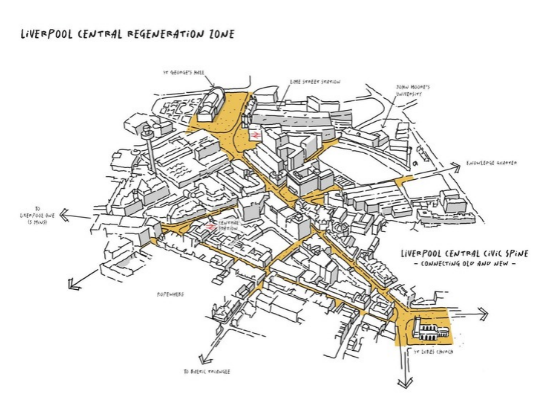
Aaron is a Masterplanner and Urban Strategist in the Landscape Architecture and Masterplanning team at AtkinsRéalis, based in London. He works with combined authorities and local councils on complex regeneration programmes across the UK and is Technical Lead on Liverpool Central Station, one of the busiest transport gateways in the country.

For many people, Liverpool Central is the first and last thing they see of the city. "Regenerating a city centre starts with the infrastructure people use every day," Aaron says. The station carries 14.8 million passenger journeys a year, and his team is working out how it can best support a city region with ambitions to grow.
Where the hard problems are
Aaron works at the early stages of large regeneration and infrastructure projects, where decisions on what gets built and why are made.
"My work is about making sure these decisions are built on a coherent investment case," he says. That means bringing the spatial strategy, economics, funding route and delivery plan together into one joined-up proposition.
In complex projects like this, he says, "the hardest problem is usually getting transport, land, funding and design logic to agree with each other. Masterplanning gives us a way to test those pieces together, early. A choice made on spatial strategy will change cost, funding route and delivery risk, so we want to see that effect before decisions are finalised.”
On Liverpool Central, Aaron and the team reframed the commission. "On Liverpool Central, that meant putting the station design, the land around it and the funding position in front of the Combined Authority at the same time, so they could see what each level of investment could unlock.” Right now, most of his time goes on the shortlisting work that will feed the Outline Business Case: which version of the project should go forward, and how it lines up with a parallel regeneration framework the City Council is developing.
From design to the boardroom
No two days look the same. "Some days I'm deep in technical detail and design work. Other days I'm in a room with senior stakeholders and board-level audiences, translating that detail into clear strategic choices they can act on."
He also continues to work on design-led masterplanning, alongside workshops and design reviews, with a focus on the quality and longevity of the places he works on.
Getting the early decisions right
"Our team works to develop the spatial strategy, bringing it together with the transport, economic, funding and delivery evidence," Aaron says. "That gives the client a single case they can defend."
These early decisions shape how far a scheme can go. A well-evidenced case carries a project through the business case and planning stages and beyond, delivering the Good Growth places need through new homes, jobs and better connected communities.
For Liverpool, that means a gateway that can cope with growth: more capacity, better connections to Lime Street and the wider network, and placed-based investment that reaches into the surrounding Gateway area and North Liverpool.
Bringing the team together
Liverpool Central draws on transport planners, economists, funding specialists, land advisors and AtkinsRealis Station Architecture team, all working to one shared goal.
The design ambition is for a station that works as a civic destination as well as a transport interchange. "That ambition sets the options we test," Aaron says. "Our architecture team is working to deliver that ambition – testing what each option would involve physically, with a station that performs its civic function alongside the complex technical work required including how you build over a live, operational station. All of this then feeds back into the investment case within an iterative and highly collaborative process."
Is this the role for you?
"This work suits people who enjoy holding lots of often competing factors at once," Aaron says: ambition for design, people and place, and the commercial, political and technical context that decides whether any of it happens.
"If you want to see how a design idea becomes an investment decision, this is a good place to do it. You work alongside the designers, the economists and the client in the same conversation."
Shape the places people love
If you want variety, a team that backs you, and work you can point to, find out why people join Buildings & Places. Explore our masterplanning and urban design roles.
Related blogs
Designing a school around a pupil’s day
From sensory spaces to outdoor learning, meet Lorenzo and the thinking behind Lisburne SEND School.

Bringing a buried canal back to life
From concept to completion, Ben reveals how Cardiff’s Canal Quarter was transformed for people and nature.

From footpaths for penguins to integrating Nairobi Central Station into the heart of the City
From local parks to international transport hubs, discover how Neil has spent 22 years designing places that bring people together.
Shely on climate-resilient design, village upskilling, and remote project delivery
From family favour to climate-smart homes, read how Shely brought sustainable design to life across continents.

A day in the life of an architect
Kirsty shares what a day in the life of a senior architect looks like and offers advice to aspiring architects.

Assistant to lead architect: navigating trust and responsibility in my role at AtkinsRéalis.
Shaping a better world: my passion for sustainable design and social impact

12 Ways you'll reach your design ambitions at AtkinsRéalis
Meet Emily Percival, an Associate Architect at AtkinsRéalis
Related jobs

Everyone belongs
We empower each individual to shine and contribute to our collective impact. We believe in the power of unique perspectives. It’s how we’re engineering a better future every single day.