

Let’s find your next opportunity
AI Assistant: {{ chat.assistant.message }}
{{meta?.totalCount}}
results found
Sort By
{{ job.job_posting_title
}}
{{ job.job_posting_title }}
{{ job.is_cms_job ? (job.cities.split(';').length > 1 ? 'Various locations' : job.location_mappings[0]) : (job.location_mappings.length > 1 ? 'Various locations' : job.location_mappings[0]) }}
{{ job.time_type }}

We are sorry there are no jobs that match your exact criteria. Try a new search term, or use the filters to continue browsing for available opportunities.
Suggested roles matches
{{ job.title }}
{{ job.title }}
{{ [job.cities[0], job.regions[0], job.countries[0]].join(', ') }}
Various locations
We are sorry there are no jobs that match your exact criteria. Try a new search term, or use the filters to continue browsing for available opportunities.
Let’s find your next opportunity
{{ job.job_posting_title
}}
{{ job.job_posting_title }}
{{ job.is_cms_job ? (job.cities.split(';').length > 1 ? 'Various locations' : job.location_mappings[0]) : (job.location_mappings.length > 1 ? 'Various locations' : job.location_mappings[0]) }}
Why this work matters
Aishwarya’s work starts with a public issue that is both technical and highly visible. When combined sewer overflows discharge into UK rivers, the effects can reach far beyond the outfall itself. River water quality can change quickly. Ecosystems can come under pressure. Communities and regulators want clear evidence on what is happening, what the risks are, and what needs to improve.
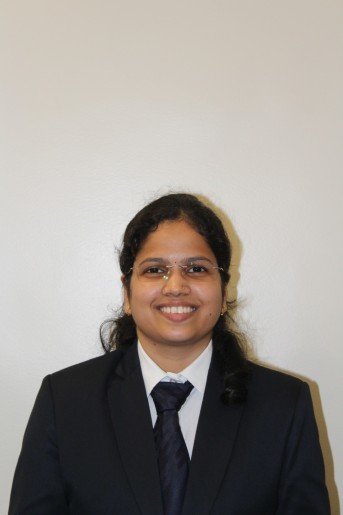
At AtkinsRéalis, Aishwarya supports that assessment work from Pune, Maharashtra. She is an intern in the Water Management Consultancy team in the Pune office, supporting the UDM-facing Water Quality team. Alongside her internship, she is studying for a Masters in Geoinformatics at the Symbiosis Institute of Geoinformatics. That combination of academic study and day-to-day project work gives her a grounded view of how environmental analysis moves from theory into engineering decisions.
From Maharashtra to UK water decisions
What makes Aishwarya’s experience specific is the link between where she is based and where the work has impact. From Pune, she contributes to water quality analysis that helps inform UK water company decisions on the impact of combined sewer overflows on rivers.
Her work focuses on assessing river conditions and pollution risk through data. That includes analyzing parameters such as BOD, COD, NH4, pH, and dissolved oxygen, which together help build a clearer picture of how overflow discharges may affect the receiving environment. She also supports river model building by considering river characteristics, pollutants, and other substances, then assessing risk levels linked to sewer overflow impact.
This is careful work, and Aishwarya describes the responsibility in practical terms. “Even small variations in data can influence design choices or compliance outcomes,” says Aishwarya Pednekar.
That line captures what the work really involves. The task is not only to process data. It is to understand what the data means in the context of environmental standards, treatment performance, and river health.
Technical work with visible consequences
In Aishwarya’s role, analysis feeds into assessment-and-improvement work. If a river is shown to be at risk from overflow discharges, that evidence can support decisions on treatment improvements, storage options, spill reduction measures, and other interventions intended to reduce harm.
The implications are environmental, regulatory, and practical. Sewer overflows can affect rivers, ecosystems, and public health. They can also influence where investment needs to go and how water companies respond to compliance requirements. Aishwarya’s contribution sits within that broader process. Her work in Maharashtra becomes part of a wider cross-team effort that supports decisions in the UK.
Learning the shift from theory to practice
For Aishwarya, one of the most important parts of the internship has been seeing how textbook knowledge changes when applied to live engineering questions. Water quality work does not sit in isolation. It connects with hydrology, design, and environmental planning, with different teams contributing to a fuller understanding of the problem.
That has made the experience more than a technical exercise. It has shown Aishwarya how detailed analysis can support action on a high-profile environmental issue, and how work carried out in Pune can help shape better outcomes for UK rivers.
Ready to turn your learning into real-world impact? Explore early career opportunities at AtkinsRéalis and help shape a more sustainable future.
Related blogs

Building more than projects: Ragavendran’s journey of growth
Some projects test your technical skills. Others change how you see your career. For Ragavendran, both happened along the way.

Beyond the design: Praveen’s journey from delivery to ownership at AtkinsRéalis
Praveen has grown by taking on new challenges, broadening his perspective, and turning experience into greater ownership.

Designing with purpose, leading with confidence: Lekhana’s journey at AtkinsRéalis
From solving complex engineering challenges to leading teams, Lekhana’s journey shows how the right opportunities can transform not just what you do, but who you become.

Creating impact through engineering excellence
What keeps an engineer inspired after nearly a decade in the industry? Devendra shares his journey.

Four decades in, still growing: How Jagannath is shaping the future of Water at AtkinsRéalis.
After nearly 40 years in the water industry, Jagannath proves that growth doesn't stop with experience, it evolves with it.

From delivery to legacy: Smita on engineering what matters
From project delivery to quality leadership, Smita's journey has been guided by a simple belief: great engineering is not just about what we build, but the impact it leaves behind.
“Your career growth is only limited by the ambition you harbour”: Piriya on 14 years, three countries, and the manager who changed everything
From Bengaluru to Ireland and back, read how Piriya built a global engineering career grounded in resilience and ambition.

Delivering 33 design packages in 3 months: Amol on leading Drainage & Land Development in Pune and shaping global airport projects
Amol Kode’s journey at AtkinsRéalis reflects rapid growth, global exposure, and leadership in action. From starting with drainage design tasks to leading Drainage & Land Development in Pune and contributing to Dublin Airport expansion projects, his story highlights what’s possible when opportunity meets capability.
Related jobs

Everyone belongs
We empower each individual to shine and contribute to our collective impact. We believe in the power of unique perspectives. It’s how we’re engineering a better future every single day.